Porterville USD is building the kind of charging depot fleets actually need
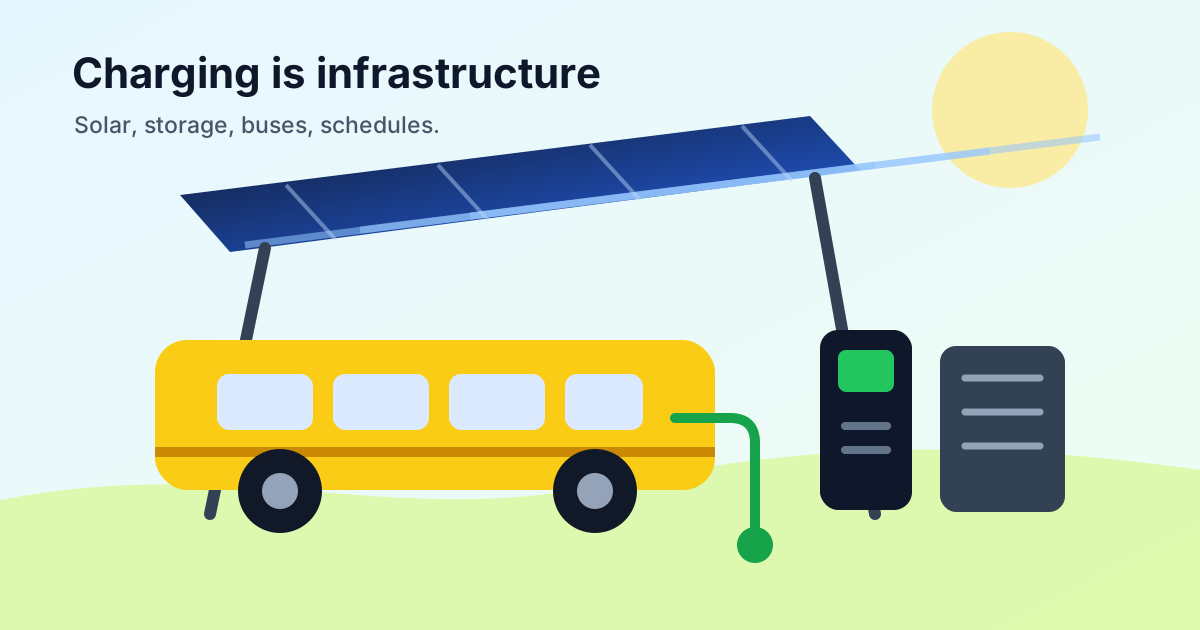
This is what charging looks like when it is treated as infrastructure, not a row of plugs.
No, the interesting part is not just that a school district is adding chargers.
The interesting part is that Porterville Unified School District is tying charging to power.
According to The Mobility House, the Porterville, California district selected the company for its Zero-Emission Transportation Infrastructure Project and Microgrid. The plan connects 35 DC fast-charging ports for a planned electric school bus fleet through ChargePilot, The Mobility House's charge management system.
The power stack matters. The Mobility House says the system will work with on-site solar, battery storage, and grid electricity. The source lists a 763 kW solar array and a 408 kW / 1,632 kWh battery storage system developed by ForeFront Power.
That is the useful distinction. A charger fills a vehicle. A depot has to run a schedule.
The project also includes eight EV charging ports for the district's white fleet, with two bi-directional charging ports, according to The Mobility House. The company says the broader setup is designed to offset about 80% of the district facilities' electricity use and avoid an estimated 21,000 metric tons of CO₂ over a 30-year project lifecycle.
Why this matters
School buses are a hard charging problem in a good way. They have routes. They return to base. They sit for long stretches. That makes them a strong fit for managed charging, solar, storage, and eventually vehicle-to-grid work.
But only if the depot is designed as a system. Put in chargers first and figure out demand charges later, and the bill teaches the lesson. Build around load, schedule, storage, and backup value, and the depot has a chance to be more than an expense.
For school districts and municipal fleets, Porterville is worth watching because it is not just buying vehicles. It is building the room those vehicles need to work.
What to watch
- Whether the V2G-capable equipment moves from capability to regular operations.
- How the district sequences bus charging around routes, solar production, and battery dispatch.
- Whether the model is repeated by other California school districts with similar fleet schedules.
- How actual electricity costs compare with the projected offset claims once the system is operating.